
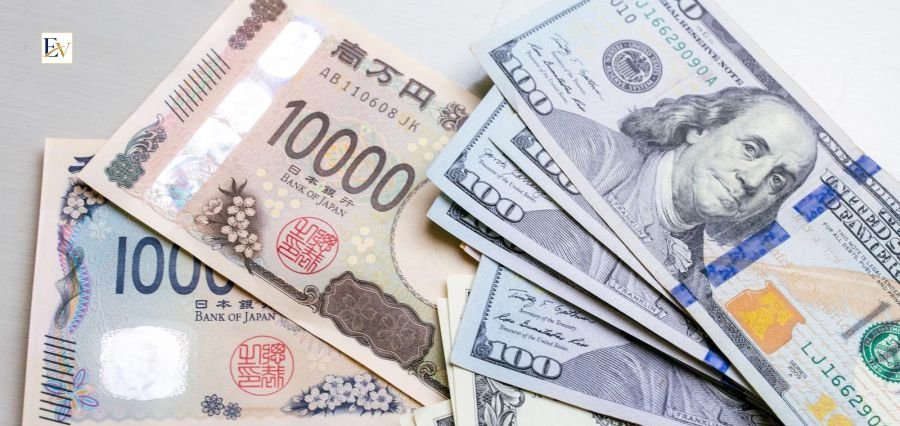
Japan has confirmed that it coordinated directly with the United States in a rare joint intervention to strengthen the Japanese yen after the currency weakened to its lowest level in nearly four decades. The coordinated action marks the first joint yen-buying intervention by the two countries since 2011 and reflects growing concern over the economic impact of prolonged currency volatility.
According to Reuters, Japan’s Finance Minister Satsuki Katayama announced that Tokyo and Washington worked together to stabilize foreign exchange markets after the yen’s sharp depreciation raised concerns over inflation, financial stability, and rising import costs. The intervention helped the yen strengthen by more than 1%, reaching around 155.20 per U.S. dollar following the announcement.
The coordinated move comes after months of persistent weakness in the yen, driven largely by the wide interest rate gap between Japan and the United States. While higher U.S. interest rates have attracted global capital into dollar-denominated assets, Japan has maintained comparatively lower borrowing costs, placing continued downward pressure on its currency.
Officials from both countries emphasized that excessive currency volatility can disrupt global financial markets and international trade. U.S. Treasury Secretary Scott Bessent expressed support for the coordinated action, highlighting the importance of financial stability and close cooperation between two of the world’s largest economies.
Japan also signaled that it stands ready to intervene again if market conditions require additional action, underscoring the government’s determination to prevent disorderly movements in the foreign exchange market.
Weak Yen Continues to Pressure Japan’s Economy
The prolonged weakness of the yen has created mounting challenges for Japan’s economy despite providing some benefits for exporters.
Reuters reported that the depreciation has significantly increased the cost of importing essential commodities such as energy, food, and raw materials. Because Japan relies heavily on imported fuel and agricultural products, a weaker currency has contributed to higher consumer prices and increased pressure on households already coping with inflation.
The recent conflict in the Middle East further intensified these pressures by pushing global energy prices higher, making imported oil and liquefied natural gas even more expensive for Japanese consumers and businesses. Combined with currency depreciation, these developments have complicated the country’s efforts to stabilize inflation while supporting economic growth.
Financial markets have also begun adjusting expectations for Japanese monetary policy. Reuters noted that Japan’s two-year government bond yield climbed to its highest level since 1995, reflecting growing expectations that the Bank of Japan could raise interest rates again, possibly as early as September, if inflationary pressures continue.
Analysts believe the coordinated intervention may temporarily discourage speculative selling of the yen, but many caution that lasting currency stability will depend on broader economic fundamentals, including interest rate policies, inflation trends, and fiscal discipline.
Businesses operating internationally are also closely monitoring exchange rate movements, as currency fluctuations affect export competitiveness, import costs, corporate earnings, and long-term investment planning.
Historic Cooperation Highlights Shared Economic Priorities
The coordinated intervention reflects the increasingly close economic cooperation between Japan and the United States as both governments seek to maintain stability in global financial markets.
According to Reuters, policymakers in both countries recognize that sharp currency swings can have consequences extending beyond bilateral trade. A rapidly weakening yen could place upward pressure on U.S. Treasury yields if Japan were forced to sell large holdings of U.S. government debt to finance additional market interventions. Close coordination helps reduce those risks while supporting confidence in global financial markets.
The intervention also carries geopolitical significance. Japan remains one of the United States’ closest strategic allies in the Asia-Pacific region, and maintaining financial stability supports broader economic and security cooperation between the two nations. Officials have emphasized that the objective is not to target a specific exchange rate but to prevent excessive volatility that could disrupt economic activity.
Despite the immediate strengthening of the yen, economists remain cautious about the long-term outlook. Structural factors—including interest rate differentials, government spending, demographic challenges, and global investment flows—continue to influence the currency’s direction. Additional intervention may become necessary if market conditions deteriorate further.
For investors, the coordinated action demonstrates that major governments remain willing to intervene when currency movements threaten broader financial stability. The announcement has also reinforced expectations that Japanese policymakers will continue balancing fiscal stimulus with monetary tightening as they work to support sustainable economic growth.
As global markets navigate inflation, geopolitical uncertainty, and shifting monetary policies, the historic collaboration between Japan and the United States highlights the growing importance of international coordination in managing currency markets. Whether the intervention produces lasting stability will depend not only on future policy decisions but also on broader economic conditions shaping the global financial landscape.