
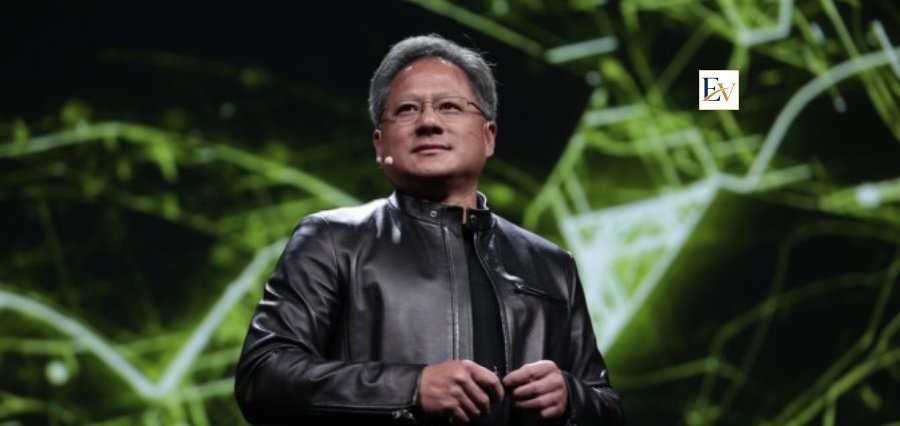
Following a dramatic 11-day leadership transition, NVIDIA’s co-founder returns as CEO, bringing renewed direction to the company at a pivotal moment in the global artificial intelligence revolution.
The technology industry is entering another defining chapter as Jensen Huang returns to the leadership of NVIDIA, the semiconductor powerhouse he co-founded more than three decades ago. On November 23, 2026, NVIDIA’s Board of Directors unanimously voted to reinstate Huang as President and Chief Executive Officer, reversing its earlier decision following his resignation on November 12. His return marks a significant development for the company and the wider technology ecosystem, where NVIDIA’s computing platforms have become fundamental to the advancement of artificial intelligence.
The decision comes at a time when AI is transforming how businesses operate, governments approach technological development, and industries prepare for an increasingly automated future. NVIDIA stands at the centre of this transformation, supplying the processors, computing infrastructure, and software platforms that enable some of the world’s most advanced AI applications.
Huang’s return is therefore more than an executive leadership change. It represents the restoration of a founder whose technological vision, strategic decisions, and long-term commitment to innovation have shaped NVIDIA’s identity and positioned it as a global leader in accelerated computing.
A Dramatic Comeback at a Critical Moment
Huang’s departure initially created uncertainty across the technology and investment communities. Following his resignation, NVIDIA appointed its Executive Vice President and Chief Financial Officer, Colette Kress, as interim CEO while the board considered the company’s future leadership.
However, within 11 days, the board reversed its position. Following discussions and meetings with Huang, directors unanimously approved his reinstatement, expressing confidence in his candour and ability to lead the organization.
The decision also followed significant attention from political and industry leaders. According to Reuters, US President Donald Trump played a role in encouraging the board to reconsider its decision. NVIDIA stated that the board received input from senior US government officials and was confident that Huang’s reinstatement presented no national security risk.
Board Chair Harvey C. Jones described Huang as the right person to lead NVIDIA, emphasizing that his return was in the interests of shareholders, employees, partners, and customers. Huang, meanwhile, expressed gratitude for the board’s confidence and described his renewed responsibility as an opportunity to lead one of the world’s most consequential technology companies at the beginning of a new industrial revolution.
Nevertheless, his return does not conclude the matters surrounding his departure. NVIDIA has confirmed that an independent board committee’s investigation will continue, alongside additional measures to strengthen national security oversight and corporate compliance.
Building a Technology Company Around a Bold Vision
Huang’s leadership journey began in 1993 when he co-founded NVIDIA with Chris Malachowsky and Curtis Priem. At the time, the company’s ambitions were centred on advancing computer graphics and developing more powerful technologies for visual computing.
The introduction of the graphics processing unit (GPU) in 1999 became a defining milestone in the company’s history. What initially transformed computer graphics and gaming eventually became a foundation for scientific computing, artificial intelligence, and advanced data processing.
Rather than limiting NVIDIA’s ambitions to its original market, Huang recognized the broader possibilities of GPU architecture. His commitment to parallel computing encouraged the company to explore applications that could address complex computational challenges across multiple industries.
In 2006, NVIDIA introduced CUDA, a parallel computing platform that allowed developers to harness GPU processing capabilities for general-purpose computing. This investment proved particularly important as researchers began using GPUs to accelerate machine learning and deep learning workloads.
Over time, NVIDIA evolved from a graphics-focused semiconductor manufacturer into a comprehensive computing technology company. Its hardware, software, networking, and development platforms now support applications across healthcare, finance, automotive, manufacturing, telecommunications, and scientific research.
This transformation demonstrates Huang’s ability to identify technological opportunities before they become mainstream commercial priorities.
Guiding the Next Generation of Artificial Intelligence
Artificial intelligence has become one of the most influential forces shaping the modern economy. From generative AI applications and intelligent assistants to autonomous systems and advanced scientific research, organizations are increasingly depending on computing infrastructure capable of processing enormous volumes of information.
NVIDIA has established a significant position in this rapidly expanding market through its advanced GPU architecture and integrated AI computing ecosystem.
Its technologies support the development, training, and deployment of sophisticated AI models. Major cloud service providers, technology companies, research institutions, and enterprises depend on NVIDIA’s computing platforms to build and operate intelligent applications.
Under Huang’s renewed leadership, the company’s ability to anticipate the next generation of computing requirements will remain essential. The opportunity extends beyond producing increasingly powerful processors. It involves developing complete platforms that connect hardware, networking, software, and AI development tools.
One particularly promising area is physical AI, where intelligent systems interact with the physical world. Robotics, autonomous vehicles, industrial automation, and intelligent manufacturing represent opportunities for NVIDIA to extend its influence beyond traditional data centers and digital applications.
As businesses increasingly explore these technologies, Huang’s strategic direction will be important in determining how NVIDIA translates its technological capabilities into practical industrial solutions.
Leadership Beyond Products and Technology
Huang’s influence on NVIDIA is closely connected to his distinctive approach to leadership. He has consistently emphasized long-term technological investment, engineering excellence, and the importance of building an environment where innovation can develop across multiple disciplines.
His leadership philosophy has encouraged NVIDIA to pursue ambitious technological projects, even when their commercial potential was not immediately apparent. The company’s early investments in parallel computing provide a strong example of how long-term thinking can create opportunities that eventually reshape entire industries.
Another important aspect of NVIDIA’s growth has been its developer ecosystem. By providing accessible tools and platforms, the company has enabled researchers, software engineers, startups, and established businesses to build applications around its technologies.
This ecosystem has strengthened NVIDIA’s position beyond the traditional semiconductor market. Its competitive advantage increasingly comes from the relationship between its processors, software, infrastructure, and the global community developing applications on its platforms.
Huang’s return provides continuity to this broader strategy while placing renewed responsibility on him to maintain the company’s innovation culture and long-term competitiveness.
Navigating Governance, Competition, and Global Challenges
Despite the confidence demonstrated by the board, Huang’s reinstatement comes with considerable scrutiny. His resignation followed reporting concerning personal relationships and an alleged foreign intelligence effort involving a businesswoman suspected of links to China. These matters remain subject to investigation and should not be treated as established findings.
NVIDIA has confirmed that its independent board committee will continue its investigation and that Huang is committed to cooperating with the process.
The company has also established a National Security and Export Control Committee and announced plans to appoint a Chief Compliance Officer to oversee company-wide compliance. These measures highlight the importance of governance, regulatory accountability, and national security considerations as NVIDIA expands its global operations.
Beyond these issues, the company faces significant industry challenges. Competition in AI processors is increasing, international trade restrictions are influencing semiconductor markets, and businesses are examining the costs and long-term returns of large-scale AI investments.
Maintaining its technological advantage will require continued research and development, efficient manufacturing partnerships, and the ability to respond to rapidly changing customer requirements.
Huang’s experience provides an important foundation, but his renewed leadership will be measured by how effectively NVIDIA addresses these challenges while continuing to advance its technology roadmap.
A New Chapter for NVIDIA and the Global Technology Industry
The announcement of Huang’s return received an immediate response from financial markets. NVIDIA shares rose sharply following the reinstatement, with Reuters reporting a 31.5% increase at the close of trading on November 23. The reaction highlighted the importance investors attach to Huang’s leadership and the company’s strategic direction.
However, the significance of his return extends beyond market performance. NVIDIA has become a critical technology partner for organizations investing in artificial intelligence, accelerated computing, and digital infrastructure. Its decisions influence the development of technologies that are increasingly becoming part of everyday business and industrial operations.
For Huang, the next chapter will involve balancing ambitious innovation with responsible corporate leadership. He must strengthen stakeholder confidence, maintain NVIDIA’s competitive position, support its global customer ecosystem, and ensure that the company continues to evolve alongside the rapidly changing AI landscape.
His reinstatement brings back the founder whose vision helped transform NVIDIA into a central force in modern computing. As artificial intelligence moves into new industries and applications, the company has an opportunity to contribute to a broader technological transformation.
With Jensen Huang once again at the helm, NVIDIA enters its next chapter with renewed leadership continuity and an ambitious innovation agenda. The challenge ahead is not simply to build faster processors or more powerful AI systems, but to shape the computing foundations that will define the next generation of technological progress.