
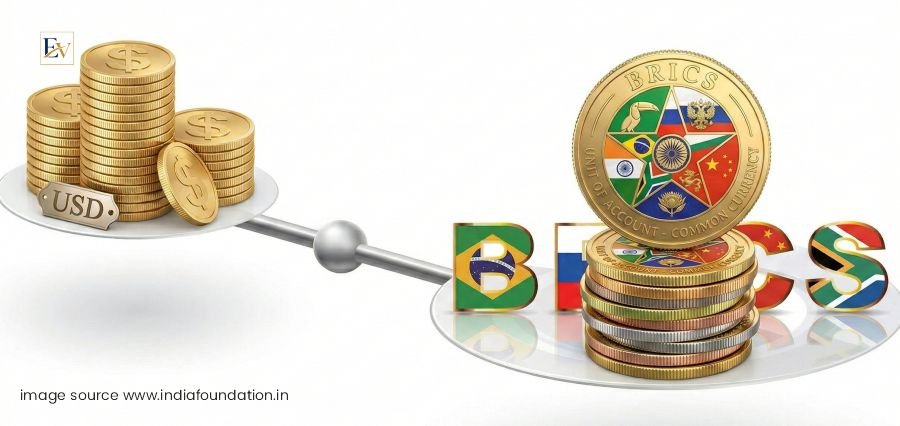
BRICS countries are advancing efforts to reshape the global financial system by expanding the use of local currencies, strengthening cross-border payment mechanisms, and increasing financial cooperation among member nations. While the bloc has not proposed replacing the US dollar with a single common currency, its members are pursuing practical measures aimed at reducing dependence on dollar-based transactions in international trade and investment. These initiatives reflect a broader shift toward a more diversified global monetary system as emerging economies seek greater financial resilience and strategic autonomy.
The push has gained momentum as BRICS expands its membership and deepens economic cooperation across Asia, Africa, the Middle East, and Latin America. By encouraging settlements in national currencies and developing alternative financial infrastructure, member countries hope to lower transaction costs, reduce exposure to exchange-rate volatility, and strengthen regional trade.
Local Currency Trade Gains Momentum
One of the most significant developments within BRICS has been the growing use of local currencies for bilateral trade. Member nations have increasingly entered agreements that allow businesses to settle transactions using domestic currencies instead of relying exclusively on the US dollar. This approach is intended to simplify cross-border commerce while reducing currency conversion costs and external financial risks.
Alongside local currency settlements, BRICS countries are also working to strengthen financial institutions that support development financing and international cooperation. These efforts include expanding lending capabilities, improving payment systems, and exploring digital financial technologies that can facilitate faster and more efficient cross-border transactions.
The strategy does not seek to eliminate the role of the US dollar, which continues to dominate global trade, foreign exchange reserves, and international finance. Instead, BRICS members are focused on creating additional options that provide greater flexibility for businesses and governments operating across multiple markets.
Expanding Economic Influence Through Financial Cooperation
The expansion of BRICS has significantly increased the bloc’s economic influence. With new member countries contributing additional energy resources, manufacturing capacity, and consumer markets, the organization now represents a substantial share of global population, economic output, and international trade.
Financial cooperation has become an important pillar of this broader economic partnership. Member nations are enhancing investment cooperation, supporting infrastructure financing, and fostering greater collaboration in banking, technology, and digital payment systems. These initiatives are designed to improve financial connectivity while supporting long-term economic development.
The growing interest in alternative payment systems has also been driven by geopolitical uncertainty, evolving trade relationships, and the desire among emerging economies to build more resilient financial networks. Diversifying payment options enables countries to conduct business more efficiently while reducing dependence on any single financial infrastructure.
The Changing Dynamics of the Global Monetary Landscape
Economists generally view the transformation of the international monetary system as a gradual process rather than a sudden change. The US dollar remains the world’s primary reserve currency due to its deep financial markets, widespread international acceptance, and established role in global commerce.
However, increasing adoption of local currency trade, regional financial cooperation, and digital payment innovations could contribute to a more multipolar financial environment over the coming years. Rather than replacing existing systems, these developments are likely to create additional channels for international transactions and investment.
For businesses, greater use of local currencies may reduce transaction costs and improve financial efficiency in cross-border trade. For governments, diversified financial partnerships can strengthen economic resilience and support broader development objectives.
As BRICS continues expanding its economic and financial collaboration, its initiatives are expected to influence discussions about the future of global finance. While the international monetary order is unlikely to change overnight, the bloc’s steady efforts to promote alternative financial mechanisms indicate that the global economy is gradually moving toward a more diversified and interconnected financial landscape.
Read Also: Meta Launches Muse Image to Expand AI-Powered Creative Tools Across Its Platforms