
Competing against established industry leaders can be challenging for small businesses, particularly when larger companies have stronger brand recognition, extensive resources, and wider distribution networks. However, size alone does not determine business success. Smaller organizations can build competitive advantages through agility, customer relationships, specialized services, and focused market strategies. Understanding how small businesses can compete requires a shift in perspective from matching the resources of larger competitors to identifying opportunities they may overlook. By concentrating on customer needs, building a recognizable brand, adopting appropriate technologies, and responding quickly to market changes, small businesses can strengthen their market position and create sustainable growth.
Understand Your Competitive Advantage
Small businesses do not need to outperform large corporations in every area to succeed. Instead, they should identify the strengths that distinguish their offerings from those of established competitors. These advantages may include specialized expertise, personalized service, faster decision-making, flexible pricing, or a deeper understanding of a specific customer segment.
The first step is to assess the market carefully. Business owners should examine competitors’ products, pricing structures, customer feedback, service limitations, and market positioning. This research can reveal unmet needs and opportunities to deliver greater value.
For example, a small consulting firm may not have the resources to serve every industry, but it can specialize in helping family-owned businesses improve financial planning or operational efficiency. This focused approach allows the firm to develop relevant expertise and communicate a clearer value proposition.
A strong competitive advantage should be specific, credible, and meaningful to customers. Rather than claiming to offer the best service, a business should explain what makes its service different and how that difference benefits its target audience.
By understanding their strengths and the needs of their customers, small businesses can compete more strategically without attempting to replicate the entire operating model of a larger organization.
Build a Strong and Recognizable Brand
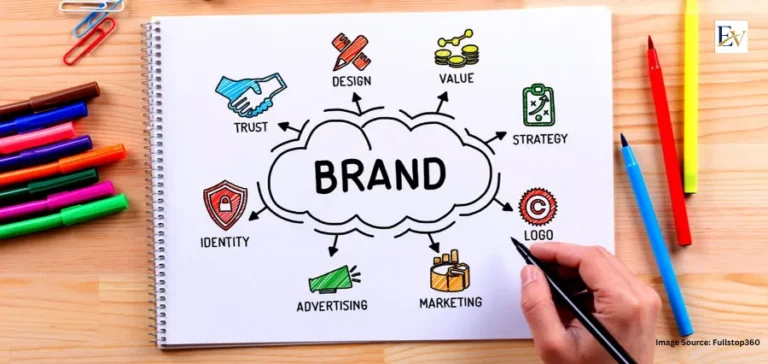
Brand recognition influences how customers evaluate businesses and make purchasing decisions. Established companies often benefit from years of market visibility, consistent messaging, and substantial advertising budgets. Smaller businesses can build recognition by developing a distinctive identity and communicating their value consistently.
A strong brand begins with a clear understanding of the target audience. Business owners should identify the problems their customers want to solve, the factors that influence their decisions, and the qualities they expect from a reliable provider.
The company’s visual identity, website, messaging, customer service, and marketing materials should communicate a consistent promise. When customers encounter the same values and quality across different interactions, they are more likely to remember the business and develop confidence in its offerings.
Storytelling can also help smaller companies establish meaningful connections. Sharing the company’s origins, expertise, customer success stories, and approach to solving problems gives potential buyers a clearer reason to choose it over a familiar competitor.
Consistency matters more than attempting to appear larger than the business actually is. A professional online presence, clear communication, and dependable service can help a small organization establish credibility while maintaining the personal qualities that distinguish it from larger companies.
Deliver Exceptional Customer Experience
Customer experience can become one of the most valuable competitive advantages for a small business. Large organizations may have extensive systems and resources, but their size can sometimes make personalized communication and rapid responses more difficult.
Smaller companies can use their flexibility to build stronger relationships with customers. Direct communication, tailored recommendations, attentive after-sales support, and timely problem resolution can make customers feel understood and valued.
Business owners should regularly collect feedback through customer conversations, surveys, reviews, and service interactions. This information helps identify recurring concerns and opportunities to improve products or processes.
For instance, a small online retailer could differentiate itself through accurate product descriptions, responsive support, reliable delivery updates, and a straightforward returns process. These improvements may require less investment than a large advertising campaign while directly addressing customer expectations.
Businesses should also pay attention to consistency. A positive first interaction will not create lasting loyalty if subsequent experiences are unreliable. Clear service standards and well-trained employees help maintain quality as the organization grows.
When customers trust a business and believe it understands their needs, they are more likely to return, recommend its services, and contribute to long-term revenue stability.
Use Digital Marketing to Expand Market Reach
Digital marketing gives small businesses access to audiences beyond their immediate geographic markets. Search engines, social media, email campaigns, and content marketing allow companies to build visibility without requiring the advertising budgets associated with major brands.
An effective strategy begins with understanding where potential customers search for information and which channels influence their decisions. Businesses serving local customers may benefit from local search optimization, while specialized service providers may find greater value in industry-focused content and professional networks.
Search engine optimization helps businesses attract relevant visitors by addressing the questions customers ask online. Publishing useful articles, creating detailed service pages, maintaining accurate business information, and using descriptive page titles can improve a website’s relevance to appropriate searches.
Social media can support brand awareness and relationship-building, but businesses should choose platforms based on audience behavior rather than trying to maintain a presence everywhere. Email marketing can help nurture existing leads, share useful information, and encourage repeat purchases.
Performance measurement is equally important. Tracking qualified website visits, inquiries, conversion rates, and customer acquisition costs helps businesses determine which activities produce results.
A focused digital marketing strategy allows smaller organizations to compete for attention by offering relevant information, demonstrating expertise, and reaching customers at the moments when they are most likely to need their products or services.
Adopt Technology to Improve Efficiency
Technology can help small businesses overcome operational limitations and compete more effectively with larger organizations. Affordable cloud-based tools, automation platforms, customer relationship management systems, and analytics software can improve productivity while reducing manual work.
For example, a customer relationship management system can help a small sales team track leads, organize follow-ups, and maintain useful customer information. Accounting software can simplify financial reporting, while inventory management tools can reduce errors and improve stock visibility.
Artificial intelligence can also support activities such as drafting initial marketing content, summarizing customer feedback, organizing information, and assisting with routine administrative tasks. However, outputs should be reviewed for accuracy, relevance, privacy, and brand consistency.
Technology investments should solve identifiable business problems rather than follow trends without a clear purpose. Business owners should evaluate implementation costs, staff training requirements, security risks, and the potential return before adopting new systems.
The objective is not to automate every interaction or eliminate the personal service that makes a small business distinctive. Instead, technology should reduce repetitive work and give employees more time to focus on customers, strategy, and higher-value activities.
By selecting tools carefully and integrating them into daily operations, small businesses can improve efficiency and deliver more consistent service without building the extensive infrastructure of a large corporation.
Focus on a Specific Market Niche
Trying to serve everyone can make it difficult for a small business to establish a recognizable position. Larger competitors may already have broad product portfolios, substantial distribution networks, and the resources to reach diverse customer groups.
A more effective approach is to focus on a defined market niche where the business can develop specialized knowledge and deliver a distinctive experience.
A niche might be based on industry, geography, customer type, price range, product specialization, or a particular problem. For example, a marketing agency could concentrate on helping healthcare providers improve their digital visibility, while a manufacturer could specialize in customized components for a specific industrial application.
Specialization makes it easier to understand customer priorities and tailor products, services, and communication accordingly. It can also help businesses develop a reputation for expertise, making them more attractive to customers seeking solutions that general providers may not offer.
Before selecting a niche, business owners should assess market demand, customer purchasing power, competitive intensity, and opportunities for future expansion. A narrow market is useful only when it contains enough customers to support a viable business.
Once the business establishes credibility in its chosen segment, it can explore adjacent markets or introduce complementary services. This gradual approach supports controlled expansion while preserving the expertise and customer relationships that created its initial advantage.
Develop Strategic Partnerships
Small businesses do not need to build every capability internally. Strategic partnerships can provide access to new customers, complementary expertise, distribution channels, and resources that would otherwise be expensive or difficult to develop independently.
Potential partners may include suppliers, professional service providers, industry associations, technology companies, and businesses serving similar audiences without directly competing.
For example, a small web development agency could partner with a branding consultancy to offer clients a more complete service. Both businesses could expand their capabilities and reach relevant customers without establishing new departments.
Partnerships can also support market entry. Collaborating with a distributor or local service provider may help a company understand customer expectations and build credibility in a new region.
Successful partnerships require clear expectations, compatible business values, defined responsibilities, and transparent commercial terms. Both parties should understand how leads, revenue, customer relationships, and operational responsibilities will be managed.
Business owners should also evaluate potential risks, including reputational exposure, dependency on a single partner, and conflicts over customer ownership.
When developed carefully, partnerships allow small organizations to extend their reach and capabilities while maintaining control over their core strengths.
Compete Through Innovation and Agility
One advantage of a smaller organization is its ability to make decisions quickly. With fewer layers of management, it may be easier to test a new service, adjust pricing, respond to customer feedback, or change an inefficient process.
This flexibility becomes valuable when it is supported by disciplined decision-making. Business owners should establish ways to gather customer insights, evaluate market developments, and test improvements without exposing the organization to unnecessary risk.
Innovation does not always require a breakthrough product or expensive research program. It may involve simplifying the buying process, offering more flexible service packages, improving delivery times, or introducing a better way to communicate with customers.
Small experiments can help businesses understand what works before committing substantial resources. For example, a service provider might test a new subscription model with a limited customer group, evaluate retention and profitability, and refine the offering before a wider launch.
Leaders should encourage employees to suggest improvements and explain operational challenges. People working directly with customers often identify opportunities that management may not see immediately.
Learning from unsuccessful experiments is equally important. Reviewing results helps businesses avoid repeating mistakes and refine their approach.
Agility creates a lasting advantage when organizations combine quick action with sound judgment, customer understanding, and a willingness to improve continuously.
Manage Finances and Growth Strategically
Competing effectively requires financial discipline. Small businesses often operate with limited cash reserves, making it essential to allocate resources toward activities that support measurable business objectives.
Business owners should monitor cash flow, gross margins, operating expenses, customer acquisition costs, and outstanding payments. These indicators provide a clearer understanding of the company’s financial position and its capacity to invest in growth.
Spending more than competitors is rarely a sustainable strategy. Instead, businesses should prioritize investments that strengthen their distinctive advantages, such as employee skills, customer service, product quality, or targeted marketing.
Pricing decisions should reflect customer value, operating costs, market conditions, and the company’s desired position. Competing exclusively on low prices can reduce margins and make it harder to fund future improvements.
Growth should also be paced according to operational capacity. Expanding into new markets or accepting more customers before establishing reliable processes can strain teams and weaken service quality.
Financial planning helps business owners distinguish between opportunities that create sustainable value and those that introduce excessive risk. With clear budgets and regular performance reviews, smaller organizations can pursue growth while protecting the resources needed to remain resilient.
Conclusion
Understanding how small businesses can compete with established industry leaders begins with recognizing that success does not depend on matching the size, spending power, or market reach of larger competitors. It depends on identifying meaningful advantages, serving specific customer needs, building trust, and using available resources intelligently.
A strong brand, exceptional customer experience, focused digital marketing, practical technology, strategic partnerships, and financial discipline can help smaller organizations strengthen their market positions. Combined with innovation and the ability to respond quickly to change, these capabilities create a foundation for sustainable business growth.
Small businesses should regularly evaluate their competitive environment, listen to customers, and refine their strategies as market conditions evolve. They do not need to win every customer or operate in every market. They need to give the right customers compelling reasons to choose them.
Ultimately, long-term competitiveness comes from delivering consistent value and building relationships that larger competitors cannot easily replicate. By concentrating on their strengths and making informed decisions, small businesses can establish a distinctive market presence, expand their opportunities, and achieve lasting success.