
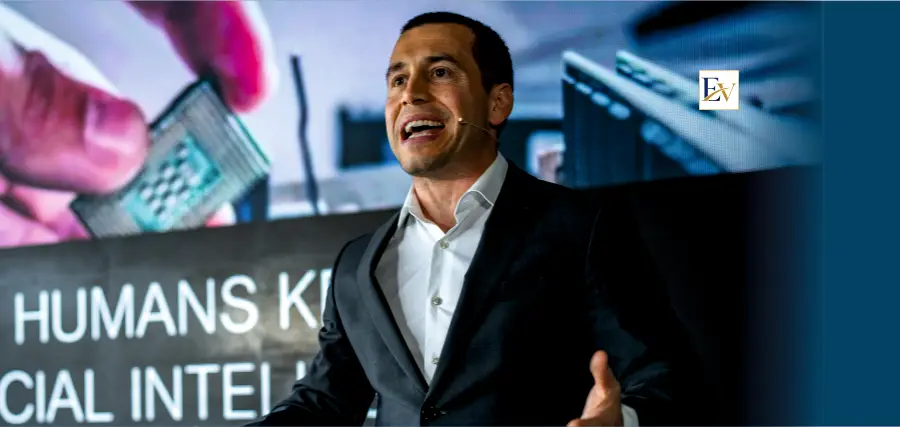
Some careers follow a predictable path. Nuno Martins chose a different direction. His journey has moved across mathematics, neuroscience, nanotechnology, medicine, entrepreneurship, real estate, longevity, and emerging technologies. What connects these different areas is a simple but ambitious question: how can knowledge, technology, and entrepreneurship help solve problems that shape the future of human life?
Martins does not view scientific disciplines or industries as separate worlds. He believes that many important challenges sit at the intersection of different fields. This perspective has shaped his scientific research, his entrepreneurial ventures, and his efforts to bring together people and organizations with different areas of expertise.
His work on the Human Brain/Cloud Interface has placed him at the center of a long-term scientific discussion about how future technologies could change the relationship between the human brain and external computing systems. At the same time, his entrepreneurial journey through Lux Premium has given him experience in building a commercial organization, creating economic value, and turning vision into practical action.
Today, his work extends beyond individual projects. Through initiatives such as the Unicorn Summit, Martins focuses on creating connections between science, entrepreneurship, investment, universities, companies, and other institutions. His journey reflects a broader belief that major challenges require more than a single breakthrough or organization. They require collaboration, resources, persistence, and a willingness to work across traditional boundaries.
A Journey Beyond One Discipline
Martins began with a strong background in mathematics. However, after completing his bachelor’s degree, he made a decision that would shape the direction of his future. Rather than immediately limiting himself to one area of specialization, he spent approximately two years exploring a wide range of subjects.
He studied biology, medicine, engineering, psychology, law, space exploration, biotechnology, nanotechnology, neuroscience, and business. This period gave him a broader perspective on how knowledge develops and how different fields can contribute to the same challenge.
The experience also changed the way he approached problems. Instead of beginning with a specific discipline, he began to focus on the problem itself and then consider which areas of knowledge could contribute to a solution.
His scientific journey also took him to the United States, where he expanded his academic and research experience as a Visiting Researcher/Scholar at the University of California, Berkeley. His work also included research at Lawrence Berkeley National Laboratory, further strengthening his exposure to an international scientific environment and interdisciplinary research. These experiences added another dimension to his professional journey, connecting his academic interests with leading research institutions and a broader global scientific community.
This approach eventually led him toward neuroscience and one of the most complex systems known to science: the human brain. His doctoral research at the University of Minho focused on neuronanorobotics and explored how future medical nanorobots could potentially monitor neural activity without causing damage and help preserve information contained within the brain.
The research opened the door to a larger scientific question. If future technologies could establish advanced communication with neurons and synapses, could they eventually create a direct connection between the human brain and powerful external computing systems?
That question became central to his work.
Exploring the Human Brain/Cloud Interface
In 2019, Martins served as the lead author of Human Brain/Cloud Interface, published in Frontiers in Neuroscience. The research explored a theoretical architecture in which future neural nanorobotics could potentially support very-high-bandwidth communication between the human brain and cloud-based computing systems.
The significance of this work lies in the combination of several fields that have often developed separately. Neuroscience provides an understanding of the brain. Nanotechnology explores systems at an extremely small scale. Computing and communication technologies provide the infrastructure for processing and transferring information.
Bringing these areas together created a framework for exploring a question that extends far beyond one scientific discipline.
Martins’ interest also includes the information associated with neural structures and activity. Memories, knowledge, personality, and other aspects of human identity raise important questions about how future technologies may help scientists better understand and monitor the brain.
The Human Brain/Cloud Interface does not describe a simple short-term product or an immediate technological reality. It represents a long-range scientific direction that depends on continued progress across neuroscience, nanotechnology, computing, communication systems, and related fields.
For Martins, ambitious scientific ideas still need practical steps. Research must continue. Teams need to develop enabling technologies. Institutions need to collaborate. Funding and partnerships must support long-term progress.
This combination of long-term vision and present-day execution has become an important part of his professional approach.
From Scientific Questions to Building Organizations
Science formed an important part of Martins’ journey, but he also recognized that ideas alone do not create large-scale impact. Scientific discoveries often require organizations, capital, partnerships, and strong execution before they can move beyond research.
This understanding led him further into entrepreneurship.
Together with his business partner Fernando Matos, Martins developed Lux Premium, a Portuguese real estate company. The company focuses on residential development and has more than 1,500 apartments in development in Portugal.
At first glance, real estate and neuroscience may appear unrelated. For Martins, however, the experience offered an opportunity to understand another essential part of turning ideas into results.
Building Lux Premium required decisions under uncertainty, team development, market understanding, access to capital, and consistent execution. It also showed him that entrepreneurship requires more than identifying an opportunity. Organizations need systems, capable people, and the discipline to move from strategy to measurable progress.
His experience in real estate also connects with his wider interest in improving the conditions of human life. Housing plays an important role in security, family stability, health, education, and economic opportunity. Martins sees the development of quality living spaces as one practical part of a broader effort to improve everyday life.
The entrepreneurial experience strengthened another belief: business and scientific ambition do not need to operate separately. A successful organization can create economic value while also building the resources and capabilities required to pursue larger goals.
Building Bridges Through the Unicorn Summit
As his work expanded, Martins reached another important conclusion. Some challenges exceed the capabilities of any single researcher, company, or institution.
This thinking contributed to the creation of the Unicorn Summit, an international platform that brings together scientists, entrepreneurs, investors, universities, companies, and global leaders around major challenges. Its mission is to connect science, technology, entrepreneurship, and investment in an effort to help solve the 17 global challenges while contributing to the creation of a world of abundance for all.
The initiative represents a shift from building individual projects toward developing broader ecosystems capable of bringing knowledge, technology, entrepreneurship, and investment together around challenges that require collective action.
Scientific research can produce important discoveries, but research often needs investment and entrepreneurship to reach wider applications. Entrepreneurs, on the other hand, can benefit from deeper scientific understanding when they work on complex technological challenges.
Martins sees value in creating a common space where different forms of expertise can meet.
This bridge-building role now forms an important part of his work. Rather than expecting one person to understand every area, he focuses on connecting specialists who can contribute different perspectives and capabilities.
That principle also shapes his view of leadership.
Leadership Built Around Mission and Capability
Martins describes his leadership approach as mission-oriented. He starts with the destination and then works backward to identify what needs to happen.
However, ambition alone does not guarantee progress. He believes leaders must remain open to criticism and willing to question their own assumptions. In science, criticism can strengthen an idea. In entrepreneurship, feedback can reveal weaknesses before they become larger problems.
This balance allows him to combine ambition with intellectual humility.
He also places significant importance on the people within an organization. His approach does not focus on making the leader the most knowledgeable person in every discussion. Instead, he believes leaders should bring together people with strong expertise and create an environment where they can contribute freely.
Different perspectives can reveal opportunities and problems that one discipline or individual may overlook. A neuroscientist may approach a challenge differently from an engineer. An entrepreneur may identify a practical opportunity that a researcher has not considered. Cultural and professional diversity can also challenge assumptions that might otherwise remain unquestioned.
For Martins, collaboration works best when talented people have meaningful responsibility. He believes leaders should provide direction while giving capable individuals enough autonomy to solve problems creatively.
High standards remain important, but he connects those standards to the importance of the mission rather than control.
Choosing Problems Worth Solving
One of the recurring themes throughout Martins’ journey is his focus on important problems.
He believes exceptional talent often looks beyond a job title or compensation package. Scientists, engineers, and entrepreneurs with strong capabilities may have many opportunities available to them. A meaningful challenge can provide another reason to join and remain with an organization.
This philosophy influences how he thinks about attracting talent. Rather than simply defining a position, he focuses on the larger question that the work addresses.
He also believes organizations need to give talented people the opportunity to learn, take ownership, and see how their contributions support meaningful progress.
This approach reflects a broader lesson from his own career. He has consistently moved toward questions that require long-term commitment and collaboration across disciplines.
The journey may include delays, failed experiments, difficult decisions, and changing circumstances. Martins views persistence as essential, but he does not define persistence as repeating the same approach. Instead, it requires maintaining commitment to the goal while learning and adjusting along the way.
Managing Long-Term Vision with Present-Day Action
Working on advanced scientific concepts creates a unique leadership challenge. Some technologies may require years or even decades of research before they reach practical maturity.
Martins believes leaders must therefore separate the long-term destination from the immediate steps required to move toward it.
A vision may extend far into the future, but progress must happen in the present. That can involve publishing research, building a team, developing enabling technologies, creating partnerships, securing resources, or bringing the right people together.
This principle allows large ambitions to become a series of practical milestones.
His scientific work, entrepreneurial ventures, and ecosystem-building efforts reflect this approach. Each requires a different form of execution, but all depend on the ability to connect a broader objective with clear action.
Looking Toward the Next Convergence
Martins sees the convergence of technologies as one of the most important areas for leaders and innovators to watch.
Rather than considering neuroscience, nanotechnology, robotics, biotechnology, advanced computing, longevity research, and brain-computer interfaces as separate areas, he expects significant developments to emerge where these fields intersect.
The relationship between computing technologies and biotechnology, for example, could support new approaches to research and discovery. Robotics can connect advanced computing capabilities with physical systems. Nanotechnology may create new possibilities for interacting with biological structures.
His own work on brain-cloud systems sits within this larger pattern of convergence.
The question, for Martins, is not simply how individual technologies will develop. It is how their combined capabilities may create possibilities that no single field could achieve independently.
He also sees longevity as an important area of scientific and social interest. Extending healthy human life involves more than increasing lifespan. The larger objective includes helping people remain healthier and maintain a better quality of life for longer.
At the same time, advances in technology create opportunities for smaller teams and organizations. Access to cloud infrastructure, global networks, advanced tools, and investment can allow relatively small groups to pursue projects that once required much larger institutions.
This shift may broaden where the next major company or scientific initiative can emerge.
A Vision Connected by One Larger Purpose
Although Martins’ work covers different sectors, he sees a common connection between them.
His scientific research focuses on understanding the brain and exploring long-term possibilities for preserving neural information and developing advanced interfaces. His interest in longevity connects with the goal of improving and extending healthy human life.
Through Lux Premium, he works in an industry connected to one of the most practical needs in society: housing. Through entrepreneurship and investment, he seeks to support organizations that address important challenges. Through the Unicorn Summit, he aims to connect people and institutions capable of combining knowledge, resources, and execution around larger problems.
These initiatives do not follow the same path, but they reflect the same broader direction.
Martins summarizes his aspirations around three interconnected objectives: preserving life, expanding human potential, and helping create greater abundance.
He does not suggest that one person or organization can achieve these goals alone. The scale of the challenges requires ecosystems where scientists, entrepreneurs, investors, universities, companies, and communities can contribute their strengths.
His approach therefore centers on connection.
Connection between disciplines.
Connection between scientific ideas and practical execution.
Connection between ambitious long-term goals and immediate action.
And connection between people who may have the resources and expertise to solve problems together.
Creating Possibilities for the Future
When discussing advice for aspiring leaders, Martins returns to the importance of choosing meaningful problems.
Time, energy, and attention remain limited. He believes people should consider carefully where they direct those resources. Large problems can appear difficult when viewed as a whole, but progress often begins by breaking them into smaller challenges that can be addressed today.
He also encourages leaders to remain curious and move beyond the boundaries of their existing expertise. Specialization provides depth, but curiosity can reveal connections between areas that may otherwise remain separate.
Another important lesson from his journey concerns execution. Vision can establish direction, but organizations, teams, partnerships, and measurable results move an idea forward.
Finally, Martins emphasizes persistence. Ambitious work rarely follows a predictable path. Rejection, setbacks, slow progress, and difficult decisions form part of many long-term journeys. The ability to learn and adapt can therefore become as important as the original idea.
For Nuno Martins, the measure of a meaningful legacy does not rest only on titles or recognition. He places greater value on lives improved, opportunities created, and new possibilities opened.
His journey continues across science, entrepreneurship, investment, and global collaboration. Yet the central purpose remains consistent: to explore important questions, build organizations that can act on them, and bring together people who can contribute to a better future.
In that sense, his work reflects an ambition that extends beyond any single research paper, company, or initiative. It focuses on what becomes possible when knowledge, entrepreneurship, technology, and human collaboration move in the same direction.
As Martins himself expresses the idea, the most meaningful legacy may not be what people remember about an individual, but what remains possible because of their contribution.


1 thought on “Nuno Martins: Connecting Science,Entrepreneurship, and the Future of HumanPotential”