
What happens when the success you worked so hard to build begins to cost you the very freedom you wanted it to create?
Entrepreneurship is often presented as a journey of expansion. More clients, higher revenues, larger teams, stronger visibility, and bigger opportunities become the milestones by which progress is measured. Yet beneath those achievements, another question can quietly emerge. Is the business creating the life its founder actually wanted, or has the founder become consumed by maintaining the business?
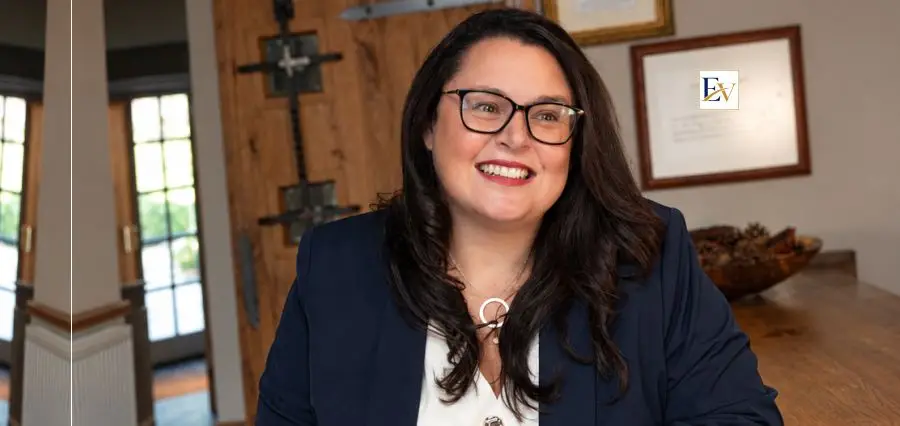
For Michelle De Almeida, that question has become central to the way she approaches leadership, entrepreneurship, and growth. As the Founder of MDA Business Coaching, Founder and CEO of Almeida Investments, international speaker, #1 Amazon bestselling author, and member of the Forbes Coaches Council, she has developed a career around helping entrepreneurs create businesses that support their ambitions without overwhelming the people behind them.
Her philosophy does not ask entrepreneurs to lower their ambitions. Instead, it challenges them to become more intentional about what those ambitions are meant to achieve. Commercial growth matters, but so do freedom, fulfilment, relationships, personal priorities, and the ability to enjoy the life that success was supposed to make possible.
Michelle’s understanding of this balance was shaped by a career that rarely followed a straight line. From serving in the Royal Navy and running a restaurant in Portugal to building a corporate career, working with startups and women entrepreneurs, entering coaching, developing an investment business, speaking internationally, and building a thriving entrepreneurial community, every stage added another perspective to her understanding of success.
Today, having supported more than 300 businesses worldwide and grown LIMITLESS into a community of more than 2,000 members, Michelle continues to challenge conventional ideas about achievement. Her message is simple but powerful: a successful business should not require its founder to sacrifice the life they wanted to build.
A Journey Shaped by Reinvention
Michelle’s professional journey began with the Royal Navy, an environment that demanded discipline, adaptability, responsibility, and resilience. Those qualities would later become valuable foundations for her entrepreneurial and leadership career. However, a medical discharge brought that chapter to an unexpected close, forcing her to reconsider the direction of her life.
Her next chapter took her to Portugal, where she entered hospitality and ran her own restaurant. The experience gave her an early and practical understanding of entrepreneurship. Running a business meant making decisions without certainty, managing competing priorities, taking responsibility for outcomes, and discovering that independence also comes with considerable pressure.
When Michelle eventually returned to Scotland, she entered the corporate world and built a successful career. Professional progression brought recognition and many of the conventional indicators associated with achievement. Yet approaching the age of 40 prompted a deeper examination of what those achievements actually meant to her.
The question was no longer whether she was successful by conventional standards. It was whether the life surrounding that success felt meaningful.
That distinction became a turning point.
Rather than dismissing the feeling, Michelle chose to explore it. She eventually moved away from corporate life and into the third sector, joining a nonprofit funded by Coca-Cola that supported startups and women entrepreneurs. This experience exposed her to founders whose challenges extended far beyond business models, marketing strategies, and financial targets.
She saw capable entrepreneurs wrestling with confidence, decision-making, boundaries, identity, and the emotional demands of building something of their own. The experience strengthened her understanding that business performance is deeply connected to the person leading the business.
Her own personal development, combined with guidance from mentors including Bob Proctor, further shaped this perspective. Michelle began to see that entrepreneurs could not always solve business problems by adding more strategy. Sometimes the most important transformation needed to happen within the leader first.
That realisation helped lay the foundation for MDA Business Coaching.
Today, her work spans coaching, investing, speaking, writing, and community building. She has supported hundreds of businesses across different markets and taken her message to audiences in Dubai, Paris, and throughout the UK. Although the platforms have changed, the underlying principle has remained consistent: the business and the person behind it cannot be treated as two separate worlds.
Redefining What It Means to Win
Michelle’s experiences fundamentally changed her understanding of ambition. Earlier in her career, progress was naturally associated with advancement. There was always another target, another position, another achievement, or another external measure that could confirm that she was moving forward.
With experience came a different perspective.
A business can grow rapidly while the founder becomes increasingly exhausted. Revenue can rise while personal freedom declines. A larger team can create more complexity rather than less. Greater visibility can bring opportunities while simultaneously increasing pressure.
For Michelle, these contradictions highlight the need for a broader definition of success.
She does not believe entrepreneurs should choose between financial performance and personal fulfilment. Instead, she advocates for a model in which commercial success and a meaningful life are designed to reinforce one another.
This thinking is reflected in the alignment first, then execution philosophy at the heart of her coaching approach. Before determining how quickly a business should expand, entrepreneurs need to understand what they actually want the business to create.
That requires a deeper examination of vision, values, priorities, lifestyle, capacity, and personal definitions of success. Once those foundations are clear, commercial decisions become more purposeful.
Positioning, pricing, margins, sales, systems, KPIs, team development, and operational structures remain critical. However, Michelle believes these tools should serve the entrepreneur’s wider vision rather than dictate it.
A strategy that looks impressive on paper can still be completely wrong for the person expected to execute it. If growth creates longer working hours, greater dependency on the founder, and less control over daily life, then the business may be expanding without genuinely improving the founder’s experience.
Michelle encourages entrepreneurs to begin with a more fundamental question: What is this business meant to make possible?
Once that answer becomes clear, strategy has somewhere meaningful to go.
From Founder to Leader
Through her work with more than 300 businesses, Michelle has observed that entrepreneurs rarely suffer from a lack of ideas. In many cases, the opposite is true. They have too many ideas, too many opportunities, and too many competing priorities.
The challenge lies in deciding what deserves attention and creating a structure capable of turning those priorities into consistent results.
Unclear positioning, inconsistent communication, reactive marketing, weak sales processes, under-pricing, poor time management, limited accountability, and scattered decision-making can all restrict a company’s progress. Yet Michelle often finds that these visible problems are symptoms of a deeper issue: the founder is trying to remain responsible for everything.
That becomes increasingly difficult as the organisation grows.
The behaviours that help someone establish a business are not always the behaviours that will help them scale one. Being involved in every decision may initially protect quality, but eventually it can prevent the team from developing independence. Perfectionism can create high standards while simultaneously slowing execution. Working longer hours can help during a difficult period, but it cannot become the permanent structure of a successful company.
The founder therefore has to evolve.
Michelle helps entrepreneurs recognise when they have become the bottleneck in their own organisation and begin shifting from constant involvement toward leadership, delegation, accountability, and strategic direction.
One MDA engagement illustrates the potential impact of this approach. Following changes involving alignment, strategic focus, pricing, delivery, sales rhythm, and leadership accountability, the business recorded a 38% increase in revenue over 12 months. Gross profit increased by 22%, founder involvement in operations fell by approximately 40%, and sales conversion improved by 18%.
For Michelle, the significance of those numbers goes beyond financial performance. They demonstrate what can happen when growth is designed around both the business and the person leading it.
The goal is not simply to build a bigger company.
It is to build a stronger company that does not require its founder to become increasingly depleted.
Championing a Different Path for Women Entrepreneurs
Women’s entrepreneurship remains an important part of Michelle’s work, but her perspective extends beyond the often-repeated conversation around confidence.
She recognises that women can face broader challenges involving access to capital, mentorship, representation, childcare, professional networks, and the often unseen responsibilities that accompany life outside the business.
Creating stronger entrepreneurial ecosystems therefore requires more than encouraging women to believe in themselves. It also requires environments that provide access to resources, relationships, knowledge, and opportunities.
At the same time, Michelle has witnessed how talented women can sometimes underestimate their own capabilities. Some hesitate when determining their prices. Others second-guess important decisions, compare themselves with competitors, or wait until they feel completely ready before taking the next step.
Michelle believes confidence does not mean the absence of uncertainty. It means developing enough self-trust to act even when uncertainty remains.
Clarity becomes an important part of that process. When entrepreneurs understand their values, priorities, ambitions, and boundaries, decisions become easier to make. They can become more deliberate with their time, communicate more clearly, price their work with greater confidence, and make choices that reflect where they want to go.
Community also plays an important role.
Through LIMITLESS, Michelle has developed a space where entrepreneurs can connect, learn, exchange experiences, and hold one another accountable. With more than 2,000 members, the community reflects her belief that leadership does not have to be developed in isolation.
The people surrounding an entrepreneur can influence their expectations, confidence, perspective, and willingness to pursue opportunities that once seemed beyond reach.
Leading From Within
Michelle’s understanding of leadership has evolved alongside her career.
Earlier in her professional life, leadership was closely associated with competence, performance, composure, and the ability to provide answers. Experience gradually revealed another dimension: genuine leadership becomes particularly important when there are no easy answers.
Personal challenges and professional transitions encouraged Michelle to examine her own experiences more honestly. Through that process, she discovered the power of authenticity.
People do not necessarily connect with leaders because those leaders appear perfect. They connect because they recognise something genuine in them.
That understanding now shapes Michelle’s work with entrepreneurs. Leadership requires more than managing teams or making strategic decisions. It also involves understanding how personal emotions, pressure, fear, expectations, and uncertainty influence behaviour.
A leader who understands their own patterns is better positioned to create space between an event and their response to it. That space can lead to clearer thinking, better decisions, and more intentional action.
For Michelle, self-leadership therefore comes before leading others. Before an entrepreneur can consistently guide a team, shape a culture, or influence an organisation, they must develop an understanding of themselves.
Finding the Human Advantage in an AI-Driven World
Artificial intelligence is transforming the way entrepreneurs work, and Michelle sees considerable potential in that transformation.
AI can accelerate research, analyse information, generate ideas, support content development, document processes, identify patterns, and automate repetitive activities. For smaller businesses in particular, these capabilities can reduce the time and resources required to complete tasks that previously demanded significant human effort.
But Michelle believes entrepreneurs must understand the difference between efficiency and wisdom.
Technology can generate possibilities. It cannot independently determine which possibility is right for a particular person, company, team, or moment.
Those decisions require context, judgment, values, relationships, timing, and an understanding of what the entrepreneur is ultimately trying to create.
This is also why Michelle believes coaching remains relevant as access to information expands. Entrepreneurs can now obtain frameworks, courses, templates, strategies, and AI-generated recommendations almost instantly. The challenge is no longer simply finding information.
It is knowing which information deserves attention.
Michelle describes this shift as a growing importance of discernment over information.
A coach can challenge assumptions, identify patterns, create accountability, and help uncover the issue beneath the issue. An entrepreneur may believe they need a new marketing strategy when the real barrier is discomfort with visibility. A founder may think they have a productivity problem when the deeper issue is uncertainty about direction.
Sometimes the most valuable answer is not another strategy.
It is knowing what to stop doing.
Turning Influence Into Impact
Michelle’s expanding platform reflects the breadth of her contribution to entrepreneurship and leadership. She has spoken internationally in Dubai, Paris, and across the UK and contributes to entrepreneurial and mentoring initiatives through organisations including Elevator, Enterprise Nation, and Young Enterprise Scotland. She is also a member of the Association of Business Mentors.
Her recognition includes being named Global Power Leader of 2026 in Coaching, an honour presented at the House of Lords in London, alongside distinctions including Brand of the Year 2025 and Unstoppable Brand 2026.
Her membership of the Forbes Coaches Council has further enabled her to contribute to conversations surrounding entrepreneurship, leadership, and business development.
Yet Michelle views visibility as more than personal recognition.
A larger platform creates a greater opportunity to influence how entrepreneurs think about success. For her, that means expanding the conversation beyond revenue, status, and growth rates to include identity, fulfilment, decision-making, personal freedom, and the relationship between professional ambition and personal life.
The question is not simply how successful someone can become.
It is what kind of life that success creates.
Building a Legacy Through Other Leaders
One of Michelle’s most important lessons has been the distinction between resilience and perpetual endurance.
There was a time when working harder seemed like the natural answer whenever pressure increased. Experience eventually showed her that personal stamina has limits. As businesses become more complex, sustainable performance cannot depend entirely on how much the founder is willing to carry.
Capacity has to be designed.
Strong systems, clear boundaries, capable teams, delegation, protected thinking time, and focused priorities can create an organisation that functions effectively without requiring the founder to remain involved in every detail.
This principle also shapes Michelle’s vision for the future of women in business.
Technology is giving entrepreneurs access to tools and opportunities that were once available primarily to larger organisations. Women can now build international brands, automate parts of their operations, access expertise across borders, and develop businesses with leaner teams.
But as technology becomes more accessible, distinctly human capabilities become increasingly valuable.
Judgment, creativity, emotional intelligence, communication, self-awareness, and purpose cannot simply be automated away. The future belongs not only to those who know how to use technology, but to those who understand how to combine it with human judgment.
Michelle wants women entrepreneurs to have greater access to capital, mentorship, networks, technology, and opportunity while retaining the freedom to define success on their own terms.
Her advice is rooted in movement rather than perfection. Entrepreneurs do not need to feel completely confident before taking action. Confidence often develops through action itself. Clarity grows when decisions are made. Capability strengthens through experience. Progress begins when waiting gives way to movement.
Her message to aspiring women leaders is therefore straightforward: become clear about what you want, take the next meaningful step, surround yourself with people who challenge your thinking, create systems before complexity forces you to, and seek support before you reach the point of exhaustion.
Most importantly, do not use someone else’s timeline as evidence that you are falling behind.
A Different Measure of Success
Michelle De Almeida’s story is ultimately about more than entrepreneurship. It is about reconsidering what achievement is supposed to mean.
Her career has moved across industries, countries, professional identities, and stages of personal development. Each transition has reinforced the same lesson: growth is most meaningful when it remains connected to purpose.
Through MDA Business Coaching, Almeida Investments, her writing, speaking, mentoring, and LIMITLESS community, Michelle continues to help entrepreneurs develop businesses that can grow without demanding that the people behind them disappear into those businesses.
Her legacy will not be defined solely by the number of companies she has supported, the investments she has made, the stages she has stood on, or the recognition she has received. Its deeper measure will be found in the leaders who become more capable, more confident, more intentional, and more aligned because of the work she has shared.
Michelle is not asking entrepreneurs to want less.
She is encouraging them to become more deliberate about what they want their success to mean.
Because building a successful business is only one part of the equation. The greater achievement is creating a business that supports the person who built it, strengthens the people around it, and contributes to a life that feels as successful from the inside as it appears from the outside.
Build the business. Strengthen the leader. Protect the life.

1 thought on “Michelle De Almeida: Redefining Success Through Purpose, Leadership & Alignment”