
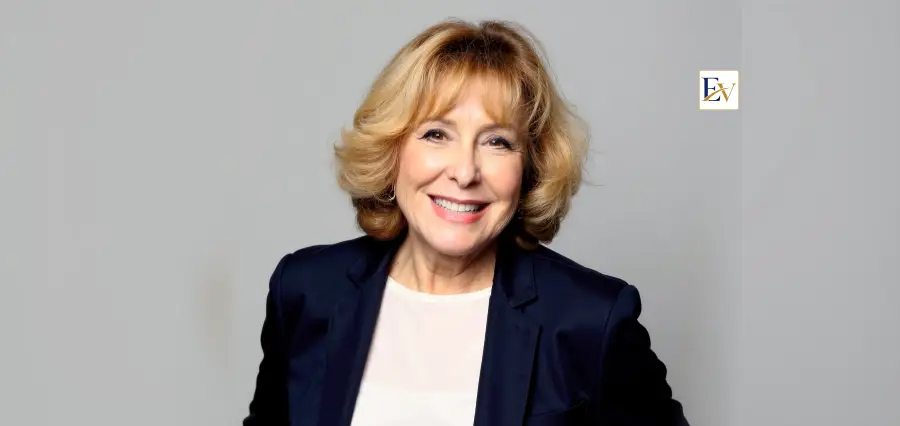
Some careers follow a clear path from one position to the next. Dr. Kelley Mondesiré chose a different route. Her professional life has moved across banking, international commerce, television, fine arts, medicine, healthcare, life sciences, branding, commercialization, international business development, and leadership.
At first glance, these fields may appear unrelated. For Mondesiré, however, each chapter added another perspective. Banking taught her responsibility. International commerce introduced her to negotiation and cultural differences. Television strengthened her creativity and communication. Medicine taught her to listen and observe. Healthcare and life sciences deepened her understanding of evidence and outcomes. International business expanded her cultural intelligence.
Together, these experiences shaped the philosophy she now calls Fearless Adaptability.
As an Executive Producer, Host, motivational speaker, and global leadership strategist, Mondesiré works with people and organizations facing change, uncertainty, and transformation. She describes herself as a Great Global Connector and a Bridge Between Nations. Her work focuses on helping people remain engaged, thoughtful, and purposeful when circumstances change.
Her central belief is simple. The best leaders still feel fear. They simply do not let it lead.
From Career Changes to a Broader Perspective
Dr. Kelley Mondesiré began her professional life while attending university. Her first work involved opening new accounts and loans at a local bank. It introduced her to responsibility and the importance of understanding people.
After university, she entered international commerce and worked with ocean consolidation and shipping space for Far Eastern importers. The experience placed her in a world of logistics, negotiation, international relationships, and cultural differences. It also showed her how much business depends on communication and trust.
Her career then moved into television and media. She spent more than two decades in an industry shaped by deadlines, creativity, competition, technology, and constant change. Her work included designing Super Bowl commercials and contributing to the branding and rebranding of major television networks.
Her creative work eventually led her back into formal education. Rather than treating creativity as a separate interest, she chose to explore it more deeply while continuing her professional career. She earned a Master of Science in Fine Arts, adding another dimension to a career already shaped by business, media, and international experience.
Approaching 40, Mondesiré made another significant career decision. She entered a five-year program in Traditional Chinese Medicine, studying both Eastern and Western approaches before becoming a Doctor of Acupuncture and Oriental Medicine.
The decision reflected a pattern that continued throughout her career: when curiosity opened a new door, she was willing to walk through it, even when the path was unfamiliar.
That transition added another dimension to her understanding of people. Medicine taught her to listen carefully, observe closely, and consider the wider context behind a problem.
Her career later expanded into healthcare, medical technology, life sciences, commercialization, branding, market strategy, international business development, and leadership.
Throughout these transitions, Mondesiré did not see herself as abandoning one career for another. She carried the lessons from each chapter into the next.
That perspective became especially important when she began reflecting on the risks involved in changing direction. She realized that professional experience does not disappear when someone changes industries. It becomes part of the foundation for what comes next.
Her career also includes scholarships in music, sculpture, and Chinese medicine, along with a fellowship from JPMorgan Chase. Each opportunity reflected her willingness to explore unfamiliar areas and develop new skills.
Looking back, she sees adaptability as the common thread.
Every new environment required her to learn its language, establish credibility, build relationships, and contribute. Those experiences eventually gave her the foundation for Fearless Adaptability.
Five Principles for Moving Through Change with Purpose
Fearless Adaptability grew from Mondesiré’s own experience rather than from an abstract leadership theory. She spent decades entering unfamiliar industries, crossing professional boundaries, working across cultures, and responding to changing circumstances. Over time, she recognized a pattern in how people respond to uncertainty.
Fear can create resistance. It can make people hesitate, cling to familiar routines, or postpone action while waiting for certainty.
Mondesiré takes a different approach. Fearless Adaptability encourages people to embrace change without letting fear dictate their decisions. Its framework follows five principles:
Relax. Absorb. Participate. Share. Enjoy.
Relax means releasing resistance to what has already happened. It creates space for a more thoughtful response.
Absorb means paying attention. Leaders need to observe their environment, understand people, gather information, recognize cultural signals, and remain open to opportunities.
Participate means choosing action. Instead of remaining a spectator during periods of change, people can take an active role in shaping what happens next.
Share means contributing knowledge, experience, ideas, and humanity. Progress becomes stronger when people bring their perspectives into the room.
Enjoy means remembering that achievement alone does not define a successful life. Fulfillment matters too.
Three ideas sit at the heart of this philosophy: Self Permission, Authority, and Agency.
Self Permission allows people to give themselves the freedom to evolve.
Authority comes from experience and earned wisdom.
Agency means recognizing that circumstances may not always remain within our control, but our response still belongs to us.
Mondesiré wants Fearless Adaptability to become more than a concept. Her goal is to make it a language people can use when facing uncertainty.
A leader dealing with disruption might ask what needs to be absorbed before making a decision. A professional considering a career change might recognize that past experience can become a foundation rather than a limitation.
That practical quality gives the philosophy its relevance.
Turning Inspiration into Action and Possibility
Today, Mondesiré works across several interconnected roles. She is a motivational speaker, global leadership strategist, educator, Executive Producer, Host, and strategic connector. Her speaking career has taken her in front of remarkably different audiences. She has addressed university students, physicians, oncologists, healthcare professionals, international organizations, trade groups, women’s organizations, and global healthcare audiences.
She has also spoken to more than 200 Russian journalists who were learning how to broadcast a democratic presidential election. These experiences taught her that communication cannot follow a single formula. Every audience brings different expectations, experiences, cultures, and professional backgrounds.
Her responsibility goes beyond delivering an inspiring speech. She wants people to leave with ideas they can remember and behaviors they can apply. Her work also involves research, writing, developing keynote material, studying business and cultural trends, building strategic relationships, and preparing for different audiences.
One of the most rewarding moments for her comes when someone realizes that a problem they considered immovable may actually be negotiable.
That moment represents the purpose behind her work. Leadership communication should create possibility.
Turning Uncertainty into a Catalyst for Growth
Modern leadership demands a different response to uncertainty than it did in previous generations. Artificial intelligence continues to reshape industries, while globalization connects markets and increases complexity. Geopolitical uncertainty can change business conditions quickly, and workforce expectations continue to evolve. At the same time, technology creates new opportunities while challenging established models. These changes can create a strong desire for control, but Mondesiré believes leaders need adaptability instead.
Her own career has required repeated adjustments. She has changed industries, expanded her education, entered unfamiliar professional environments, and developed expertise in areas that once sat outside her experience. Those transitions taught her that resilience involves more than surviving difficult periods. Resilience means remaining intellectually and emotionally available to what comes next.
This idea also changes the way she views fear. She does not believe leaders need to eliminate fear before they can act. Fear can provide information. It can highlight uncertainty or signal that a decision requires greater attention. The important distinction comes afterward: fear can be heard without becoming the decision maker.
This approach also applies to career development. Mondesiré believes professionals can become trapped by identities they have spent years building. They may remain in familiar roles because they fear losing the value of their previous work. Her experience offers another perspective: experience travels with you.
A person who changes careers does not erase the knowledge gained in previous chapters. Those experiences can create an unusual combination of skills that becomes valuable in a new environment.
Making Fear a Signal Rather Than a Limitation
Modern leadership demands a different response to uncertainty than it did in previous generations. Artificial intelligence continues to reshape industries, while globalization connects markets and increases complexity. Geopolitical uncertainty can change business conditions quickly, and workforce expectations continue to evolve. At the same time, technology creates new opportunities while challenging established models. These changes can create a strong desire for control, but Mondesiré believes leaders need adaptability instead.
Her own career has required repeated adjustments. She has changed industries, expanded her education, entered unfamiliar professional environments, and developed expertise in areas that once sat outside her experience. Those transitions taught her that resilience involves more than surviving difficult periods. Resilience means remaining intellectually and emotionally available to what comes next.
This idea also changes the way she views fear. She does not believe leaders need to eliminate fear before they can act. Fear can provide information. It can highlight uncertainty or signal that a decision requires greater attention. The important distinction comes afterward: fear can be heard without becoming the decision maker.
This approach also applies to career development. Mondesiré believes professionals can become trapped by identities they have spent years building. They may remain in familiar roles because they fear losing the value of their previous work. Her experience offers another perspective: experience travels with you.
A person who changes careers does not erase the knowledge gained in previous chapters. Those experiences can create an unusual combination of skills that becomes valuable in a new environment.
Developing People and Building High-Performing Teams
Mondesiré values curiosity, integrity, initiative, flexibility, and communication when developing people and building high-performing teams. Among these qualities, she pays particular attention to curiosity. While technical skills can often develop through experience, genuine curiosity is much harder to create.
She respects people who can confidently say, “I do not know yet, but I will find out.” For her, this response demonstrates honesty, confidence, and a genuine willingness to learn. It reflects an openness to new ideas while showing the determination to find the right answer.
Strong teams also need the psychological space to contribute. People require clear expectations and accountability, but they also need to know that their perspectives matter. Mondesiré believes leaders build trust through consistency, transparency, active listening, and a willingness to share credit.
Her approach to mentorship follows the same philosophy. She does not aim to create people who resemble her. Instead, she wants to help individuals discover, strengthen, and apply their own unique capabilities.
Her mentoring style involves asking thoughtful questions, challenging assumptions, sharing experience when useful, and then giving people enough space to develop their own judgment. Rather than providing every answer, she encourages individuals to think independently and make informed decisions.
Ultimately, the goal is independence. A successful mentoring relationship should leave another person more confident in their own authority, rather than more dependent on someone else’s advice. For Mondesiré, developing people means giving them the confidence, perspective, and freedom to grow into their own strengths.
A Career Defined by Connection and Possibility
Mondesiré’s achievements reflect the breadth of her professional experience. Her career has taken her across banking, international shipping, television, media, fine arts, medicine, healthcare, life sciences, branding, commercialization, international business, and leadership strategy. Each field has contributed to a broader perspective that continues to shape her work today.
Her media career included designing Super Bowl commercials and contributing to major television branding and rebranding initiatives. At the same time, she continued her education while managing demanding professional responsibilities. Later, close to the age of 40, she entered medical training, demonstrating her willingness to pursue new areas of knowledge regardless of conventional timelines.
Her educational journey includes a Master of Science in Fine Arts and a Doctor of Acupuncture and Oriental Medicine. She also received scholarships in music, sculpture, and Chinese medicine, along with a JPMorgan Chase fellowship. These experiences reflect the multidisciplinary approach that has remained central to her professional journey.
Her speaking experience has taken her across professional and cultural boundaries. She has worked with students, physicians, oncologists, healthcare professionals, business leaders, international organizations, trade groups, women’s organizations, journalists, and global audiences.
Yet, she measures achievement differently today. The moments that matter most are often those that help another person see a possibility that once seemed unavailable. That perspective explains why she describes herself as a Great Global Connector and a Bridge Between Nations.
Connection has remained one of the strongest themes throughout her career. She has connected business with creativity, healthcare with leadership, Eastern and Western perspectives, commerce with culture, and people with opportunities.
Her career demonstrates that a professional path can gain strength from variety when every experience adds something meaningful to the next chapter.
Creating Meaningful Impact Across Borders and Industries
Mondesiré now wants to expand Fearless Adaptability into a broader leadership platform. Her plans include keynote speaking, executive programs, organizational workshops, media, thought leadership, and global collaboration. She wants the principles of Fearless Adaptability to become practical language for leaders navigating change and uncertainty.
Her broader vision also focuses on connecting people and ideas across borders. She sees significant opportunities at the intersection of technology, healthcare, culture, business, and human development. Over the coming years, she expects artificial intelligence, human-machine collaboration, longevity, healthcare transformation, demographic change, and cross-cultural leadership to significantly influence organizations.
At the same time, she believes distinctly human capabilities will become even more valuable. Judgment, empathy, creativity, discernment, communication, and trust will remain essential as technology continues to advance.
Her goal, therefore, is not visibility alone. She wants to create meaningful impact. Success will mean seeing people become more thoughtful, courageous, and adaptable decision-makers because they encountered her ideas and applied them to their own leadership journeys.
Empowering the Next Generation of Leaders
Mondesiré encourages emerging leaders to stop waiting for permission. She believes people should learn aggressively, remain curious, and continually develop their expertise without allowing that expertise to become rigidity.
Communication matters. Understanding people matters. Exposure to different cultures matters. When possible, travel can also broaden perspective by placing people outside familiar environments and encouraging them to see the world through different lenses.
She also encourages future leaders to become comfortable saying, “I was wrong.” Leadership does not require certainty. It requires sound judgment, the willingness to learn, and the humility to adapt.
Her advice to her younger self reflects the same philosophy: leave the house, follow your dreams, and never allow someone else’s doubt to become your own. She believes people can build their own sense of security through experience, resilience, learning, and action.
For emerging women leaders in particular, she wants them to understand that professional reinvention has no expiration date. A career change at 40, 50, or even 60 can represent evolution rather than failure.
Her broader message is equally clear: Do not wait for your time. Create it.
A Legacy Built on Permission
Dr. Kelley Mondesiré hopes her legacy will begin with permission: permission to begin again, enter a room that once seemed closed, change careers, challenge an assumption, or cross a professional, intellectual, cultural, or geographic border.
She wants people to understand that their careers do not need to follow a straight line to have a powerful direction. Her own life demonstrates that principle.
Banking gave her one set of lessons. International commerce gave her another. Television gave her a new language. Fine arts expanded her creative perspective. Medicine changed the way she listened. Healthcare strengthened her understanding of evidence and outcomes. International business taught her about culture and connection. Leadership brought those experiences together.
Looking backward, she no longer sees a series of disconnected careers. She sees a process of building. Each chapter prepared her for the next.
That perspective gives Fearless Adaptability its deepest meaning. Adaptability does not mean abandoning the past. It means understanding what the past has taught you and carrying that knowledge into the future.
Mondesiré wants to be remembered as someone who connected worlds and helped people recognize possibilities within themselves.
Her message is particularly relevant in a period when change often creates anxiety. She sees change not only as disruption but also as an invitation. The future will demand people who can learn, participate, connect, and adapt while remaining grounded in their humanity.
For Mondesiré, that begins with five simple principles:
Relax. Absorb. Participate. Share. Enjoy.
Together, they capture the philosophy behind her work and the lessons gathered across a career that has never followed a conventional path.
Her story shows that reinvention does not mean starting from nothing. Sometimes, it means finally seeing how everything you have learned can come together.

1 thought on “Dr. Kelley Mondesiré: Turning Change Into Opportunity Through Fearless Adaptability ”