
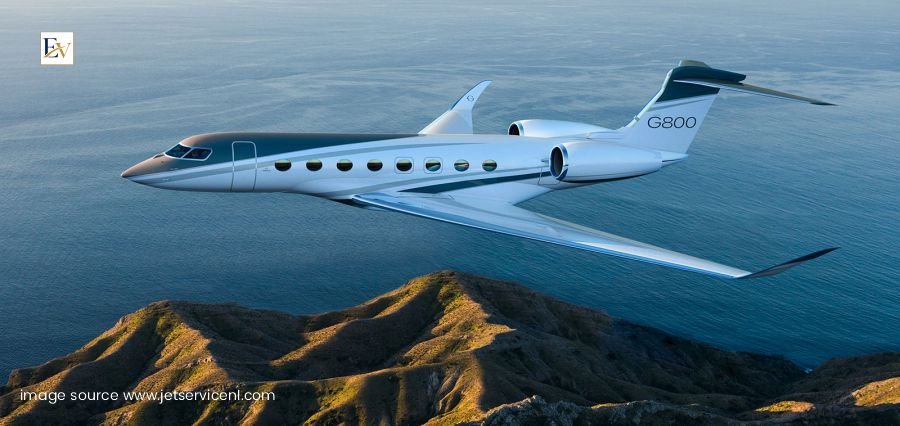
Gulfstream Aerospace has achieved another milestone in sustainable aviation after successfully completing a high-altitude flight campaign using 100% sustainable aviation fuel (SAF) in its Gulfstream G800 business jet. Powered by Rolls-Royce Pearl 700 engines, the aircraft became the first business jet to complete a high-altitude emissions test programme entirely using neat SAF, marking an important step toward reducing aviation’s environmental impact.
The flight campaign focused on studying how sustainable aviation fuel influences non-carbon dioxide emissions, particularly the formation of contrail-producing particles at altitudes of up to 50,000 feet. Researchers believe reducing these emissions could play a meaningful role in lowering aviation’s overall climate impact alongside efforts to reduce carbon emissions.
High-Altitude Testing Advances Sustainable Aviation Research
The Gulfstream G800 completed a series of test flights using 100% sustainable aviation fuel while collecting detailed emissions data under real operating conditions. The programme was conducted in collaboration with Rolls-Royce, whose Pearl 700 engines successfully operated on the alternative fuel throughout the campaign.
The primary objective was to evaluate the effect of neat SAF on particulate emissions that contribute to contrail formation. Preliminary findings indicate a measurable reduction in these particles, suggesting that wider adoption of sustainable aviation fuel could help lessen the climate effects associated with aircraft condensation trails.
Contrails, which form when aircraft exhaust mixes with cold, humid air at cruising altitude, have become an increasing area of research within the aviation industry. Scientists believe that reducing the particles responsible for their formation could complement broader decarbonization strategies aimed at achieving net-zero emissions in aviation.
The campaign also demonstrates the operational capability of modern business aircraft and advanced engines to safely operate using 100% sustainable aviation fuel without compromising performance.
Industry Pushes Toward Lower-Emission Flight
Sustainable aviation fuel has emerged as one of the aviation industry’s most important near-term solutions for reducing greenhouse gas emissions. Produced from renewable feedstocks such as waste oils, agricultural residues, and other sustainable materials, SAF can significantly reduce lifecycle carbon emissions compared with conventional jet fuel.
Aircraft manufacturers, engine developers, airlines, and fuel producers are increasingly collaborating to certify aircraft and propulsion systems for operation on higher SAF blends. Demonstration flights such as the Gulfstream G800 campaign provide valuable technical data that can support future certification efforts and encourage broader commercial adoption.
The latest achievement builds on Gulfstream’s earlier sustainability initiatives, including pioneering long-distance flights using 100% sustainable aviation fuel. Continued testing helps validate both aircraft performance and environmental benefits while supporting the industry’s transition toward cleaner aviation technologies.
Innovation Supports Aviation’s Net-Zero Ambitions
The business aviation sector has increasingly positioned itself as a testing ground for advanced sustainable technologies. Because business aircraft often introduce new technologies before wider commercial adoption, successful demonstration programmes can accelerate innovation across the broader aviation industry.
In addition to sustainable fuels, manufacturers continue investing in more efficient engines, lightweight materials, improved aerodynamics, and digital flight optimization systems to reduce fuel consumption and emissions. These combined efforts are expected to play a central role in helping the aviation sector achieve its long-term climate objectives.
The Gulfstream G800’s successful completion of the 100% SAF flight campaign highlights the growing momentum behind sustainable aviation innovation. As research continues and fuel availability expands, sustainable aviation fuel is expected to become an increasingly important component of global efforts to reduce aviation emissions while maintaining the performance, reliability, and long-range capabilities demanded by modern air travel.
Also Read: India’s Hub-and-Spoke Aviation Model Set to Simplify International Travel